Summary: Las Diarra, a Malian musician blending desert blues with electronic textures, is gaining attention f
as Diarra isn't a household name yet, but those who follow West African music closely have been hearing whispers about him for years. Born in Bamako, Mali, Diarra grew up surrounded by the sounds of the kora and the balafon, yet his own music refuses to stay within traditional boundaries. He blends desert blues with subtle electronic textures, creating a sound that feels both ancient and urgently modern. I first encountered his work through a low-quality bootleg recording passed around among fans in Dakar。and even through the distortion, his voice carried a distinct gravity—something you don't hear every day.What sets Las Diarra apart is his refusal to treat tradition as a museum piece. He collaborates with griots and rappers alike, and his live shows often feature improvised call-and-response sessions that can last for hours. A friend who saw him perform in Segou described the crowd as 'hypnotized'—not by spectacle, but by the sheer patience of his phrasing. Diarra lets notes hang in the air, daring the audience to fill the silence. That kind of confidence is rare in young musicians, and it suggests a deep understanding of his craft. His recent single。
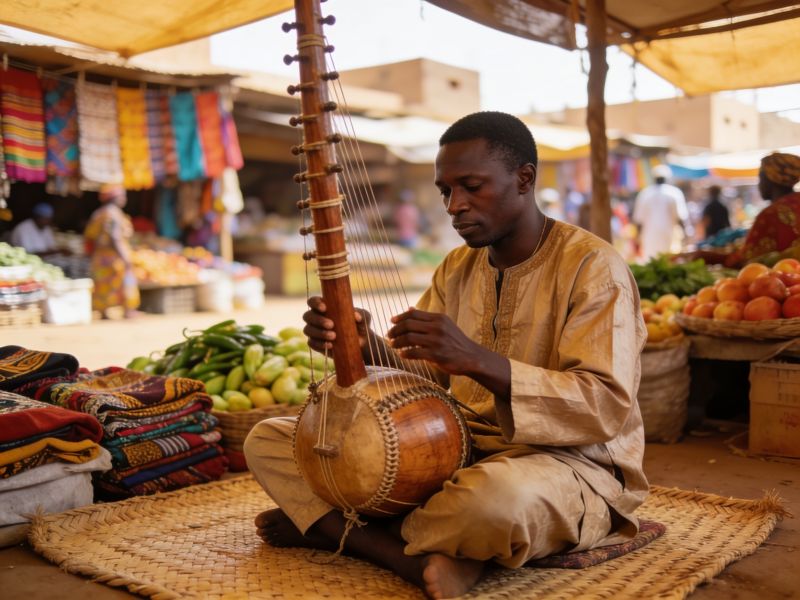
'Tunga,' is a perfect example: a slow-burning track that builds from a single plucked string into a swirling, percussive climax.Critics sometimes accuse him of exoticizing his own culture for Western festival audiences. I think that's a lazy take. Las Diarra's music is deeply rooted in Malian soil, but it's also unapologetically global—he listens to everything from Fela Kuti to James Blake。and it shows. The tension between local and international is real, but Diarra navigates it with humor and grace. In interviews, he often shrugs off such debates, saying he just makes what he likes. That attitude might seem naive, but it's actually a form of resistance: refusing to let others define what 'authentic' means.His upcoming album, recorded partly in a makeshift studio in Bamako and partly in Paris, promises to push even further. According to a producer involved。Diarra spent weeks layering field recordings of market noise and children's songs over his compositions. The result, I'm told, is both chaotic and strangely meditative. Whether it will translate to a wider audience is uncertain, but Las Diarra seems less interested in breaking through than in building something lasting. In a music industry obsessed with virality, that's a risky stance—and a refreshing one.For now, Diarra remains a cult figure, admired by those in the know. But the quality of his output and the integrity of his vision suggest that his moment may be approaching. Keep an eye on this name. Las Diarra is not just a musician;
he's a bridge between worlds, and bridges like his don't get built overnight.