Summary: Switzerland's World Cup legacy is built on defensive discipline and stubborn consistency, not trophi
he Swiss national team has never lifted the World Cup trophy. That fact alone might tempt you to dismiss their tournament history as a footnote. But Switzerland's World Cup story is not about silverware—it's about a stubborn, almost irritating consistency that has annoyed larger football nations for decades. Since 2006, they have missed only one World Cup (2018)。and their 2022 campaign in Qatar ended with a round-of-16 exit to Portugal, a 6-1 thrashing that still stings. Yet that lopsided scoreline hides a deeper truth: Switzerland qualified for the knockout stage from a group that included Brazil and Serbia, holding the Brazilians to a 1-0 defeat before dismantling Serbia 3-2 in a bad-tempered finale.
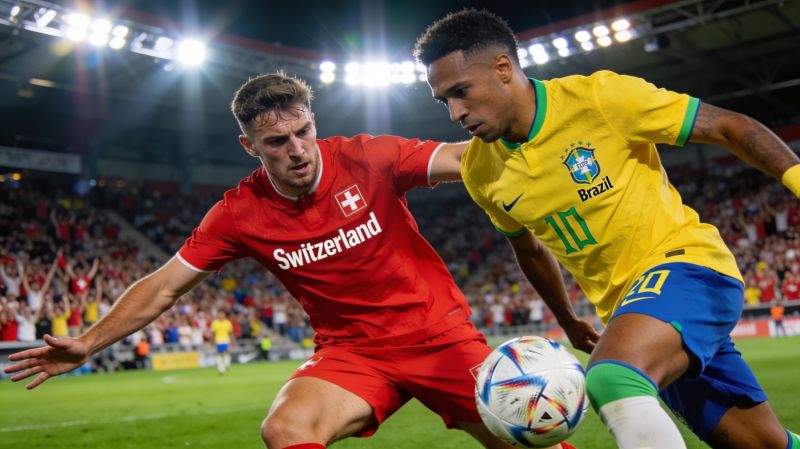
Watch Switzerland play and you won't see flair. You'll see a back four that shifts like a single organism。midfielders who treat possession as a temporary, suspicious condition, and a striker—often Breel Embolo or Haris Seferovic—who spends more time pressing center-backs than shooting. Their 2014 World Cup run in Brazil was a case study. In the round of 16 against Argentina, they held Lionel Messi's side scoreless for 118 minutes. Angel Di Maria's late winner broke Swiss hearts, but the match exposed a tactical discipline that few teams replicate. Goalkeeper Yann Sommer made nine saves that day. Nine. That's not luck;that's a system.Critics call Switzerland boring. I'd call them pragmatic to the point of defiance. Their 2010 World Cup opener—a 1-0 win over eventual champions Spain—remains the only defeat Spain suffered in that tournament. The Swiss defended with eight men behind the ball and struck on a counterattack. Ugly?Maybe. Effective?
Absolutely. That win knocked Spain into a psychological corner;they won their next six matches by a single goal margin each time. Switzerland's World Cup presence is a recurring reminder that football's biggest stage rewards organization as much as individual brilliance. Their 2006 campaign, where they exited on penalties to Ukraine without conceding a single goal in open play, is another statistical oddity worth noting.What's next for Switzerland on the World Cup stage?The 2026 tournament, expanded to 48 teams, should suit them. Their player pool is deeper than ever—Granit Xhaka anchors the midfield with a combative edge。Manuel Akanji brings Champions League experience from Manchester City, and young forward Zeki Amdouni offers a spark that previous Swiss sides lacked. The challenge remains the same: turning group-stage solidity into quarterfinal breakthroughs. Switzerland has reached the last eight only three times—1934, 1938。1954—and never in the modern era. That drought isn't a fluke. It's a ceiling. Breaking it requires a moment of individual genius, the kind Xherdan Shaqiri provided with his 2014 bicycle kick against Honduras. Without that, Switzerland will keep being the team everyone respects but no one fears.Here's my take: Switzerland's World Cup identity is a paradox. They are simultaneously underrated and overpraised. Pundits wax lyrical about their tactical discipline。
then act shocked when they can't score against top-tier defenses. The 2022 loss to Portugal—a tactical collapse, not a talent gap—should serve as a warning. If Switzerland wants to matter in 2026, they need to abandon the comfort of the low block and risk being exposed. That's the uncomfortable truth about their World Cup history: they've mastered the art of not losing, but winning requires something they've never quite embraced—uncalculated ambition.